

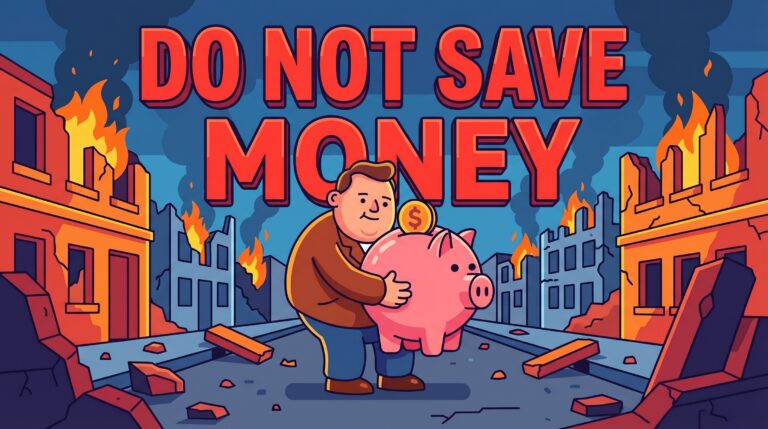
What if everyone woke up tomorrow and decided to stop spending money?
No more coffee.
No more shopping.
No more unnecessary purchases.
At first, this sounds like the perfect world—financial discipline, less waste, and more savings. But in reality, this “smart” decision could trigger a serious economic slowdown.
This idea is known as the Paradox of Thrift.
💡 What Is the Paradox of Thrift?
The Paradox of Thrift explains a simple but powerful truth:
What is good for one person may be harmful when everyone does it at the same time.
Saving money is a smart habit. It helps individuals build security and prepare for the future. But when everyone saves and stops spending, businesses lose customers, revenue drops, and jobs can disappear.
🔄 How Money Actually Works
In a healthy economy, money doesn’t just sit still—it moves.
- You spend money → a business earns income
- That business pays employees → they spend money
- The cycle continues
This is called the circular flow of income.
When spending stops, this cycle breaks.
Less spending → less income → fewer jobs → even less spending.
⚠️ Why This Matters
If too many people focus only on saving:
- Businesses struggle to survive
- Unemployment rises
- Economic growth slows down
In extreme cases, this can lead to a recession.
⚖️ The Balance Is Key
Saving is important.
Spending is also important.
A healthy economy needs both.
The goal is not to stop spending—but to spend wisely while still keeping money flowing.
🎬 Watch the Full Explanation
🚀 Final Thought
Next time you think about saving every single dollar, remember:
You’re not just managing your own money—you’re also part of a much bigger system.
And sometimes… spending that $5 coffee helps keep the world running.

0 Comments